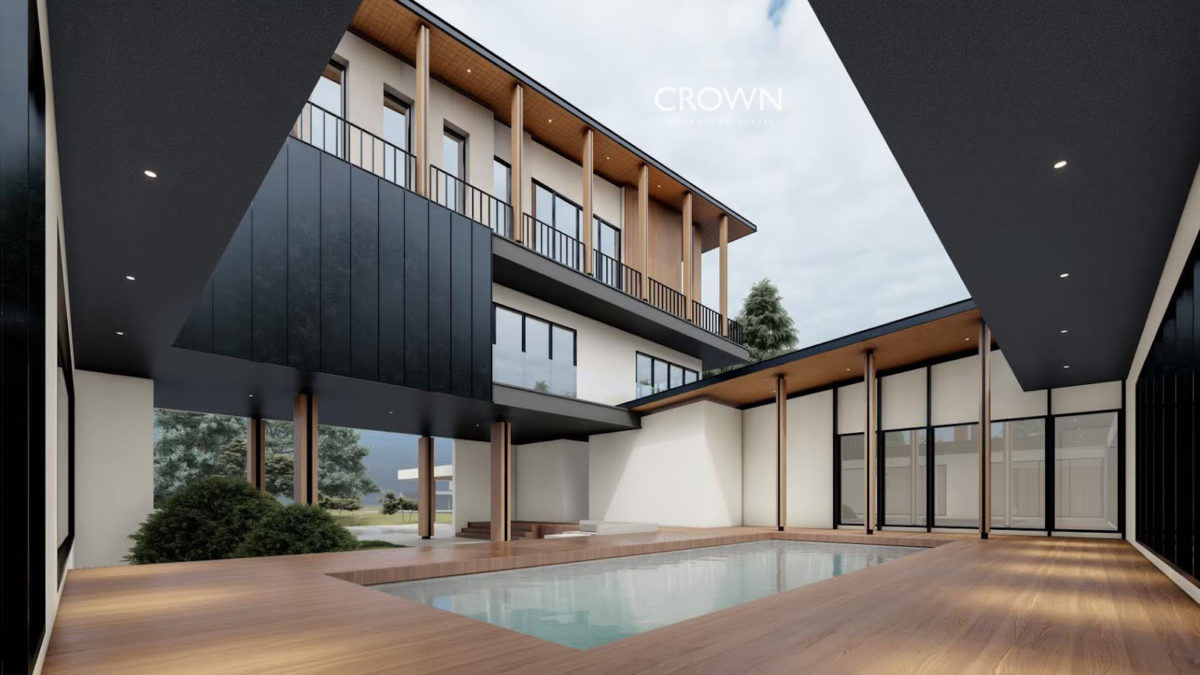
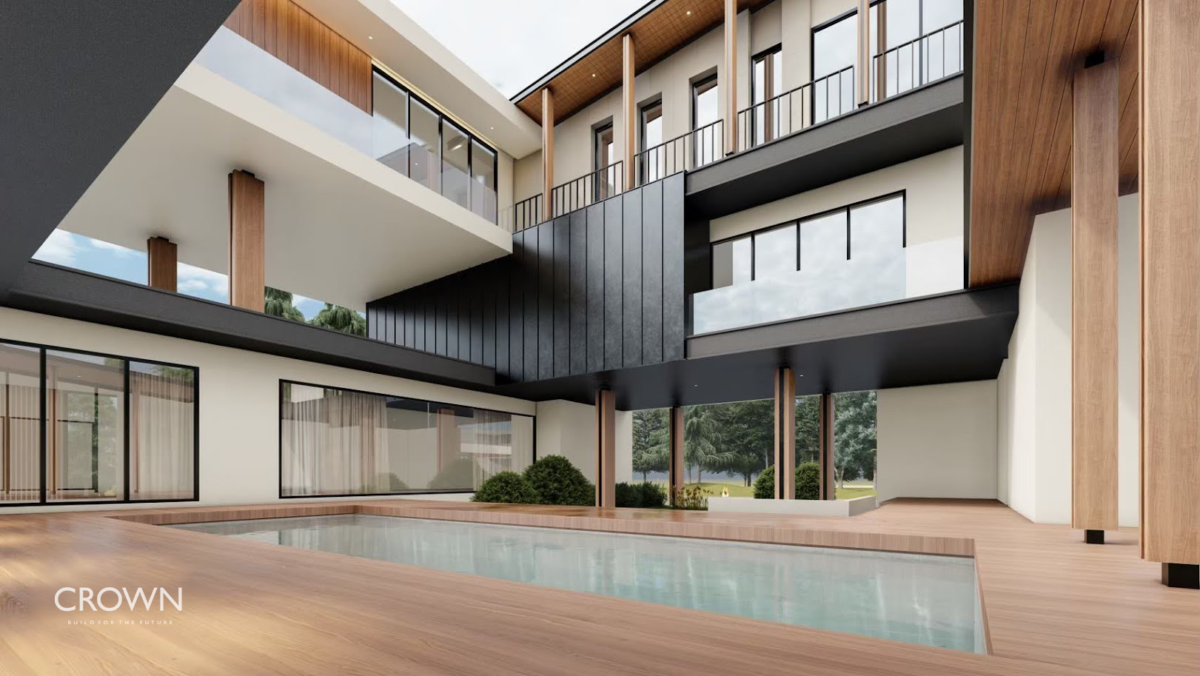
A house that looks impressive in photographs is not necessarily comfortable to live in—particularly when architectural concepts developed for cooler climates are transferred to Thailand without considering heat, humidity, intense sunlight and seasonal rain.
Modern Tropical Luxury is more than contemporary architecture decorated with tropical planting. It begins with the environment itself, using orientation, shading, ventilation, landscaping and semi-outdoor spaces to shape the architecture.
The objective is to create a refined residence that feels open and connected to nature while responding intelligently to a hot and humid climate.
Beginning with the Site
Before deciding on the architectural form, the design process should examine the site’s solar exposure, prevailing winds, neighbouring buildings, views, privacy and surrounding landscape.
In hot-humid conditions, the home should be protected from direct sunlight while remaining open to useful breezes. An elongated plan or a series of connected pavilions can increase the number of external openings and support cross-ventilation.
East- and west-facing façades require particular attention because low-angle sunlight is difficult to control with horizontal roof overhangs alone. Service areas, solid walls, vertical screens, planting and secondary façades can be positioned as protective layers before heat reaches the main living spaces.
Overhangs, Façades and Transitional Spaces
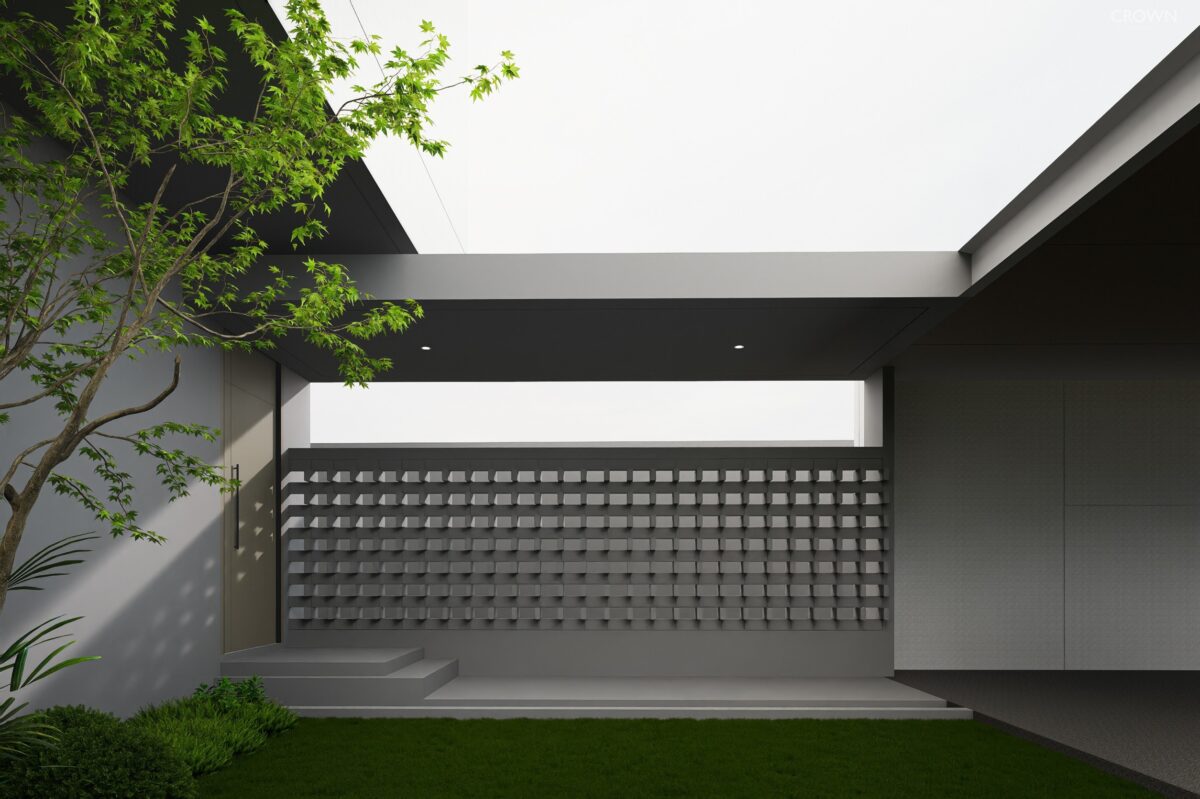
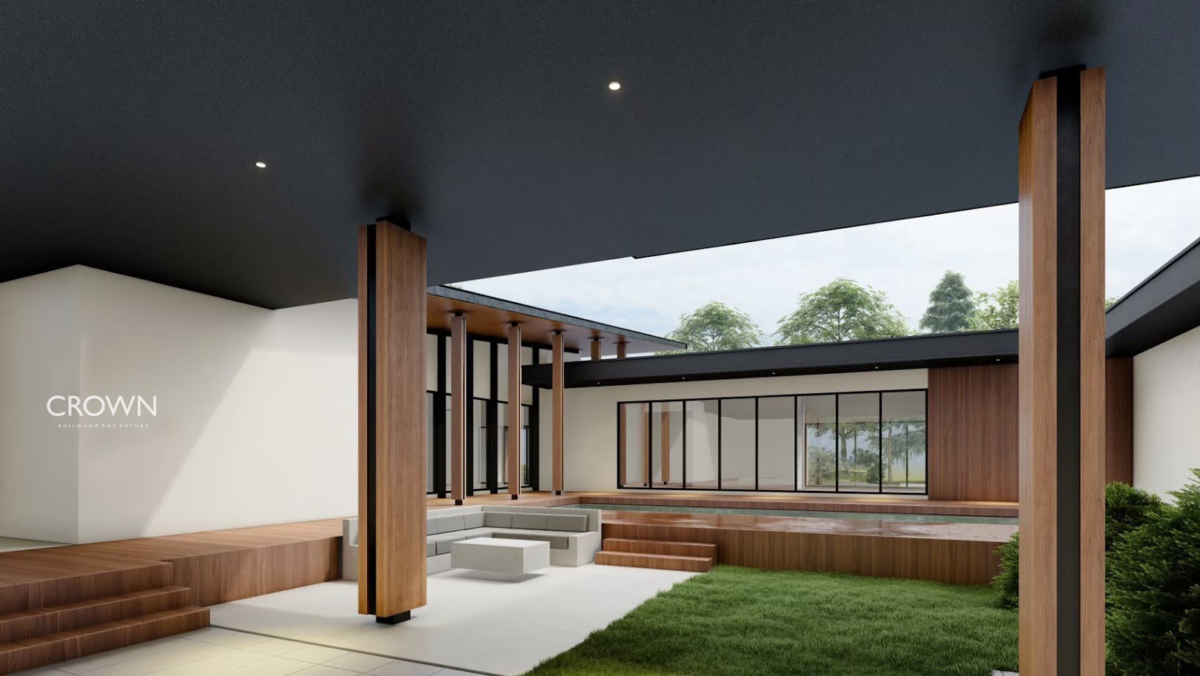
Extended roof overhangs are visually associated with tropical architecture, but they also perform an essential environmental function. When properly designed, they reduce direct sunlight and rain exposure on walls, doors and windows.
Passive-design guidance for hot-humid climates recommends shading external walls and openings throughout the year. Covered verandas, deep balconies and semi-outdoor spaces can create a thermal buffer between the external environment and air-conditioned rooms.
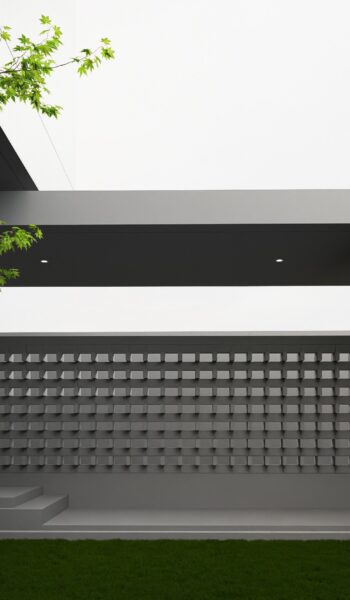
A secondary façade can filter light, reduce heat and improve privacy. Depending on the architectural language, it may be created with aluminium fins, engineered timber, perforated panels or adjustable louvres.
Connecting Interior Space with Nature
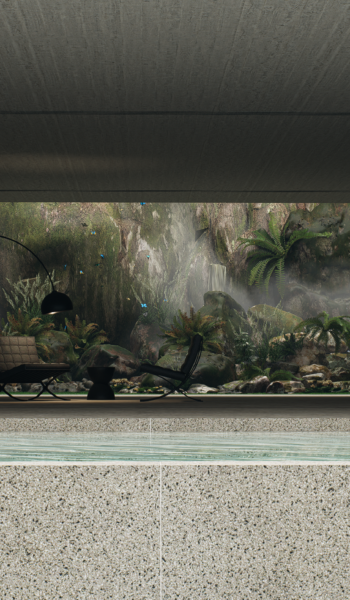
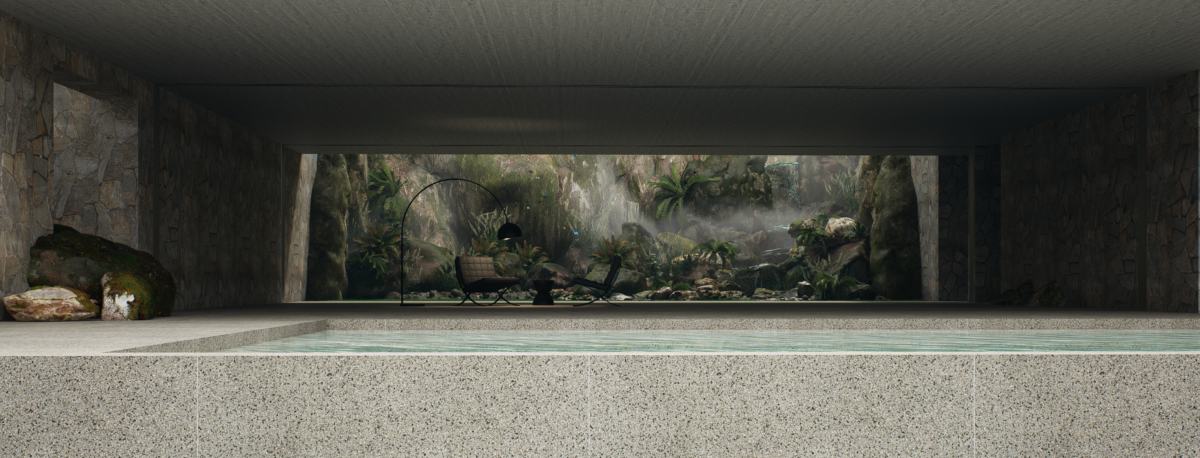
Modern Tropical residences often create a strong relationship between living areas, gardens, courtyards, terraces and swimming pools. Large sliding doors can extend reception areas outdoors and allow the house to accommodate different activities.
Large areas of glazing, however, must be supported by appropriate orientation, glass specification, shading and ventilation. Without these considerations, openness can result in excessive heat gain and increased energy consumption.
A well-designed courtyard can bring daylight into the centre of the house, provide views of greenery and separate different functions without creating a closed interior. Drainage, planting, irrigation and moisture control should therefore be coordinated as part of the architecture.
Luxury as an Everyday Experience
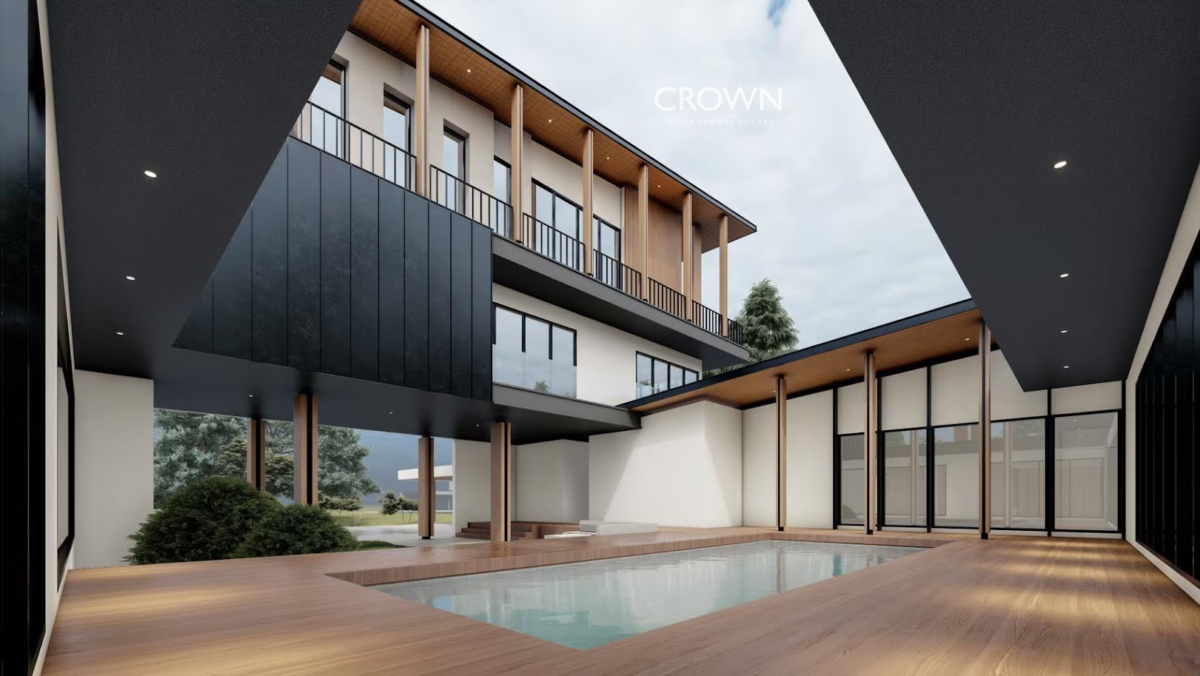
Luxury in a Modern Tropical home is not defined simply by the quantity of stone or glass. It is created through experiences that change throughout the day.
Morning light passing through a screen, moving shadows from a tree, breezes across a veranda and reflections from a pool can give the architecture a living quality.
Materials should be selected for durability under sunlight, humidity and temperature variation. External timber requires a realistic maintenance strategy, poolside surfaces should provide slip resistance, and metal components should be specified for exterior exposure.
Openness without Losing Privacy
Urban luxury residences may have limited garden space or close neighbouring buildings. Privacy must therefore be developed together with the home’s connection to nature.
Layered planting, garden walls, screens and internal courtyards can create private outdoor environments. Instead of opening directly toward the street, principal rooms may face an internal landscape, allowing residents to use outdoor spaces comfortably in everyday life.
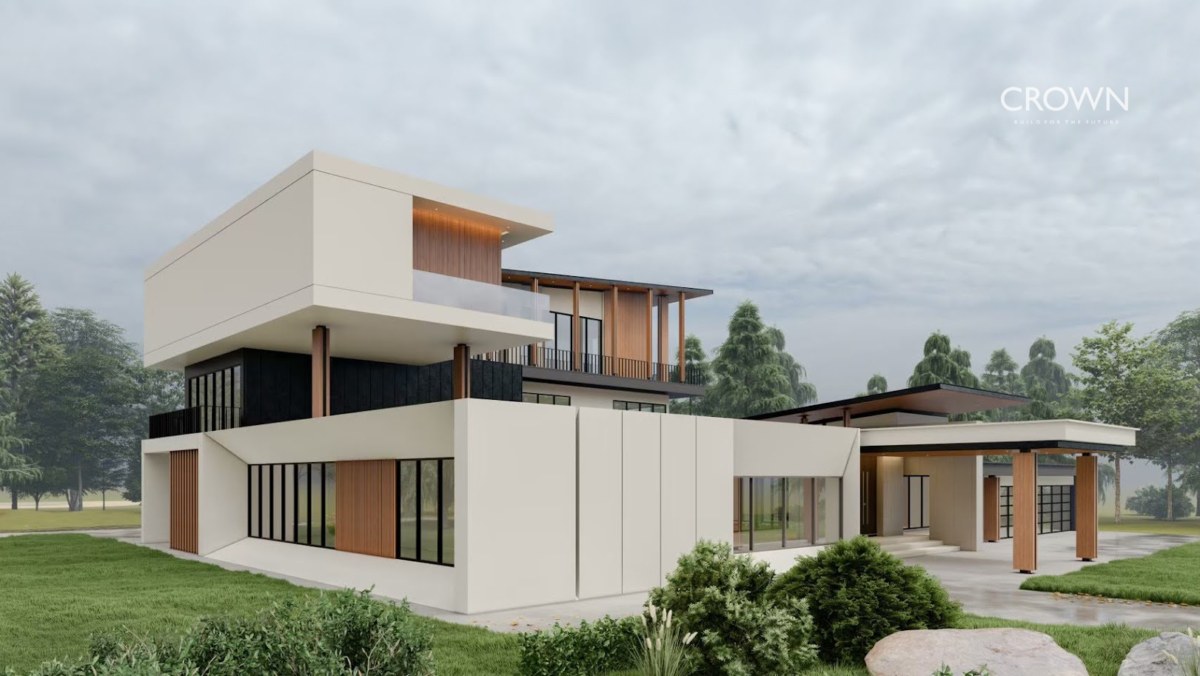
Architecture Shaped by Its Location
Modern Tropical Luxury should never be treated as a standard form placed identically on every site. Each property has a different relationship with sunlight, wind, views and surrounding development.
CROWN studies both the site and the homeowner’s lifestyle to coordinate roof overhangs, façades, gardens, pools and interior spaces as one integrated system—creating a private resort-like residence designed specifically for living in Thailand.