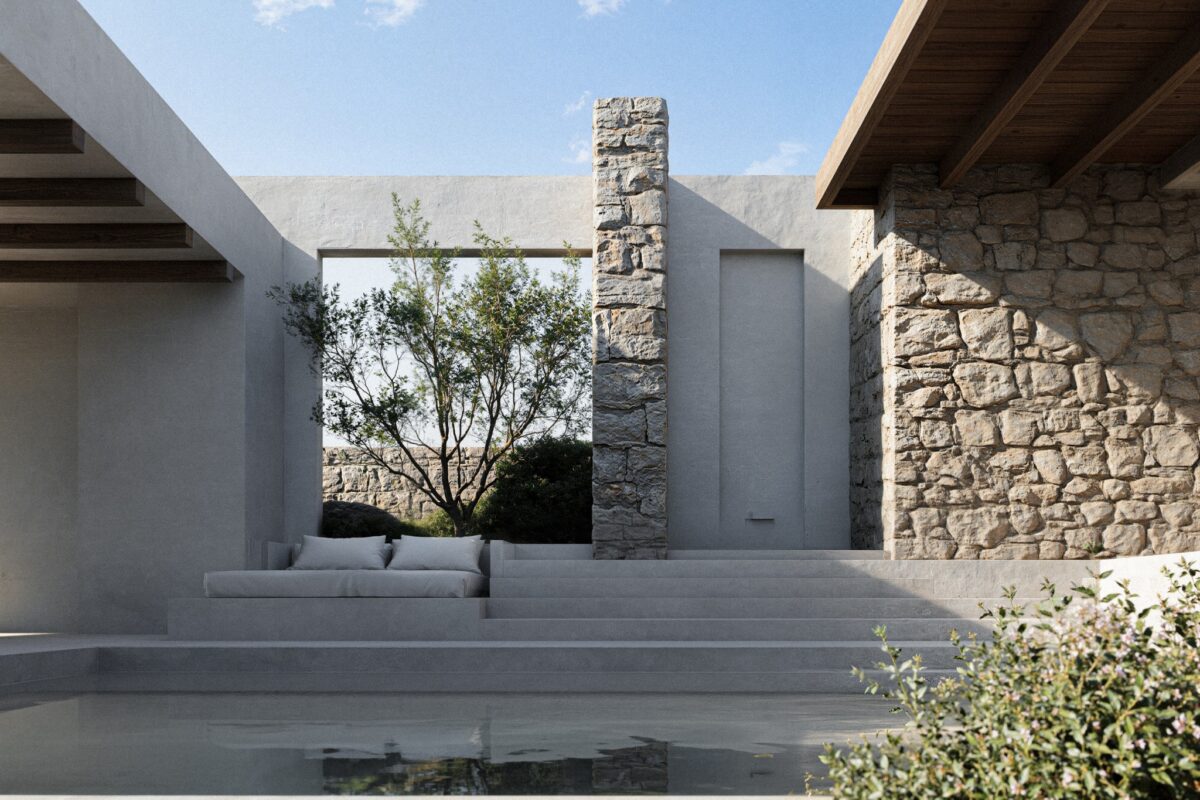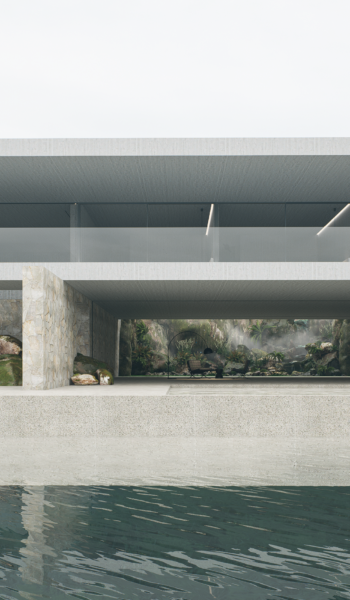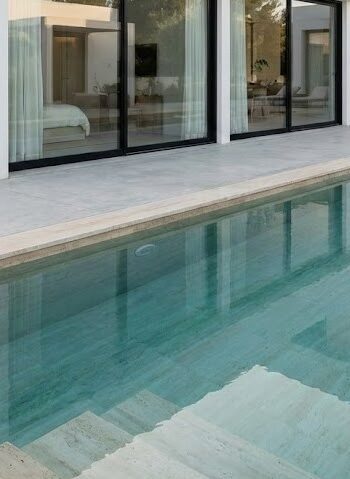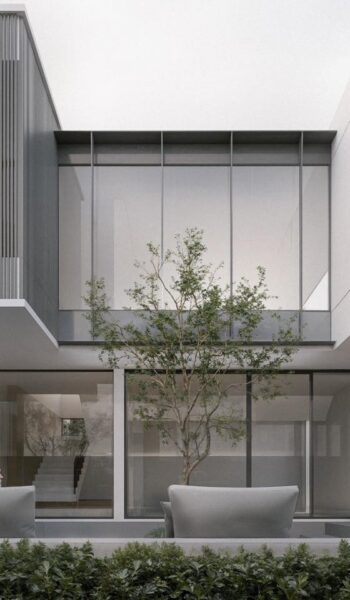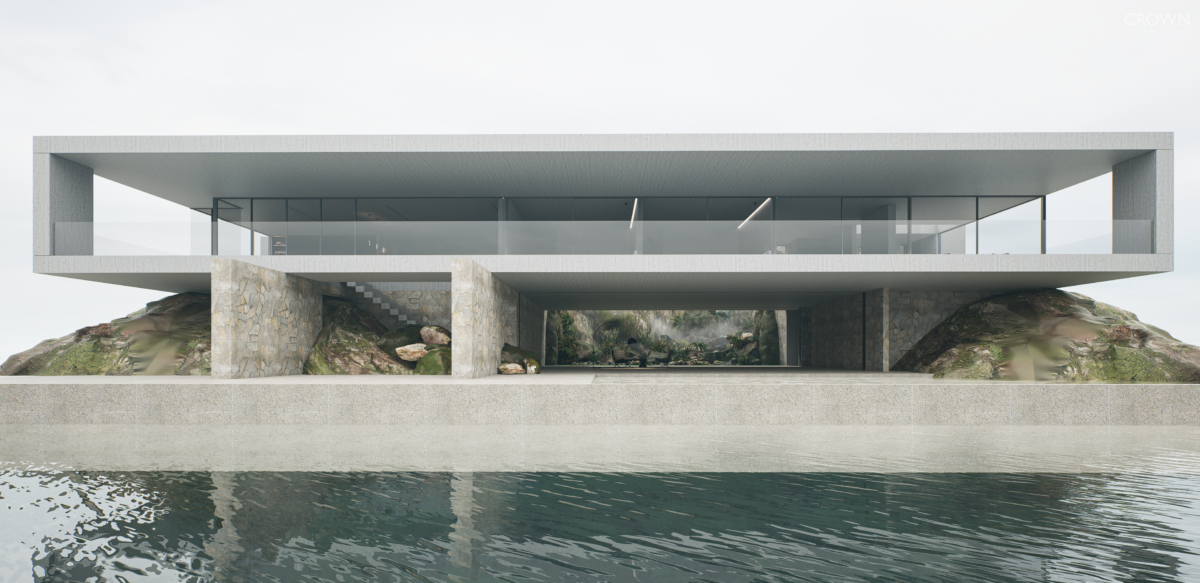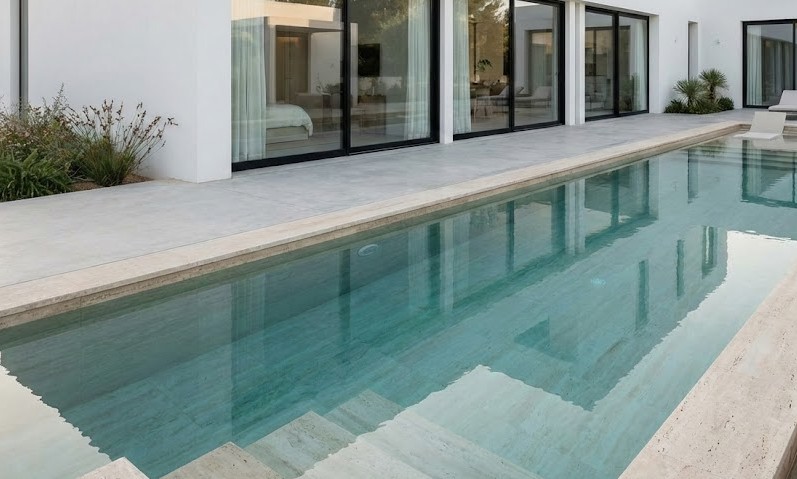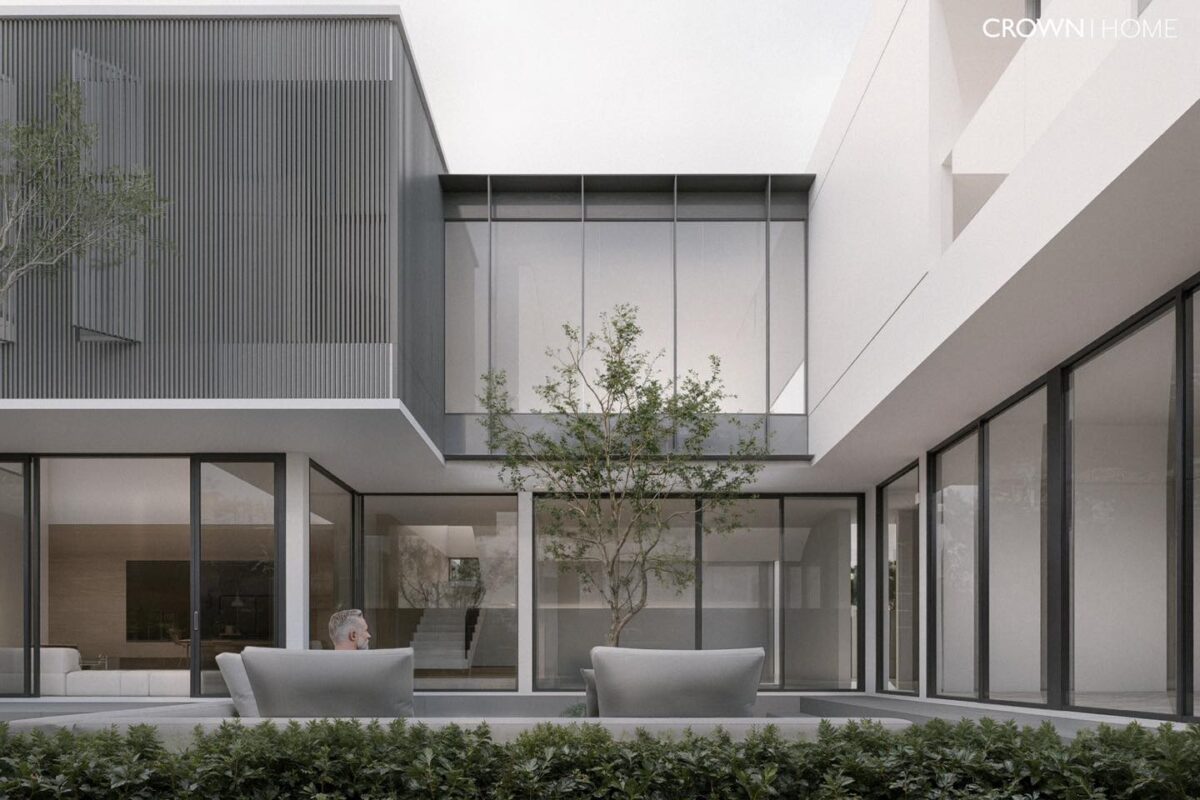
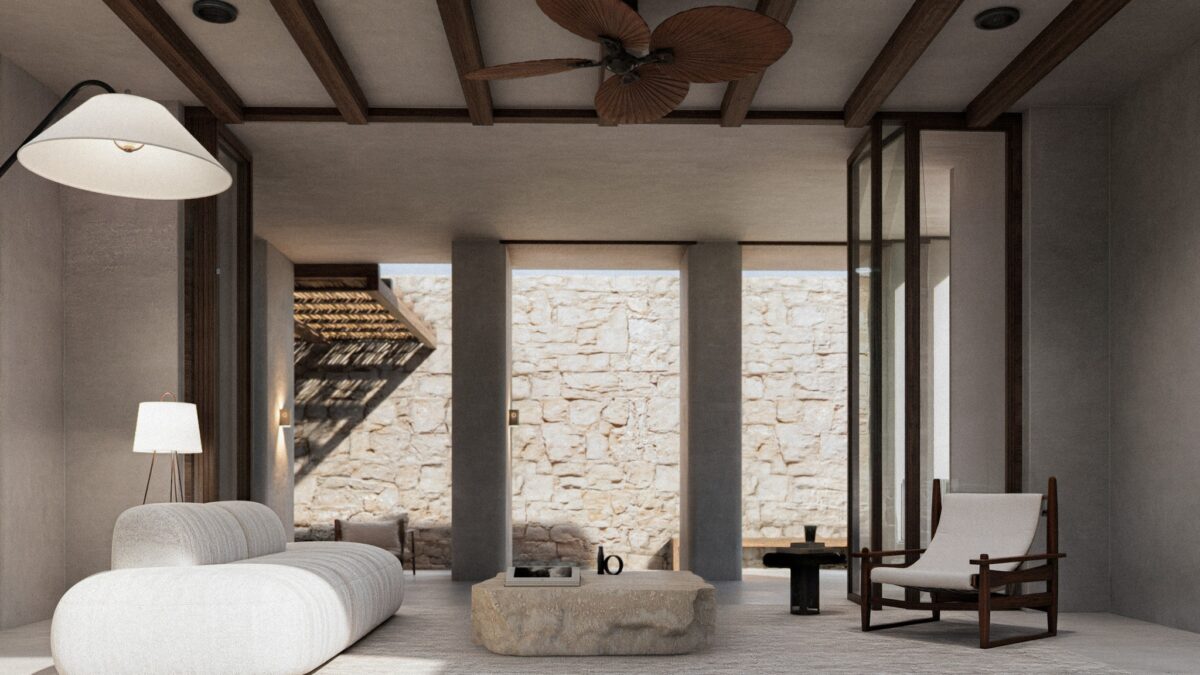
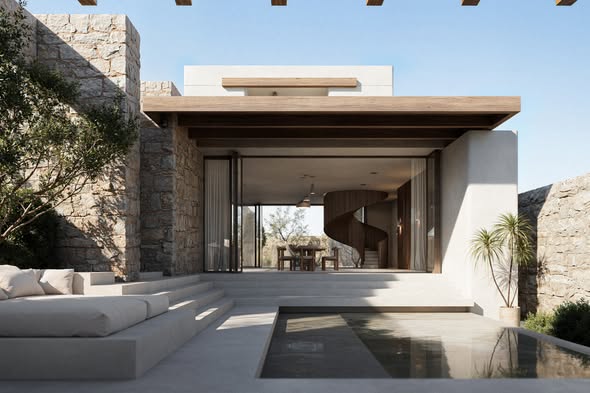
A pool villa is often misunderstood as simply “a house with a swimming pool.” But in real architectural design, a pool villa is a home that intentionally designs a restful lifestyle—through a plan that naturally leads you into relaxation, a usable relationship between inside and outside, and an environment that carefully controls wind, sun, and privacy.
The real priority isn’t the pool’s size. It’s making the pool the center of the home’s daily rhythm from morning to night and ensuring the areas around it are genuinely livable, not just beautiful for photos.
The Pool Must Be the Center of Living (Not a Decorative Feature)
A comfortable pool villa usually has a clear view axis: from the entrance, through the main sitting area, ending at the water surface. This axis instantly makes the house feel calmer and more composed, because both the eye and the body are naturally guided toward a “rest zone.”
The key is to ensure main areas such as the living room, dining space, or even corridors—can constantly sense the pool: through direct views, reflected light, shadow movement, or the feeling of open air.
Design Note:
“Seeing the pool” is not the same as “feeling the pool.” If the pool is placed too far away, or visually blocked by walls or furniture, the sense of water disappears even when the surface is still technically visible.
A good view axis should come with a continuous walking axis for example, stepping from the living room to the pool deck within 3–8 steps, not via long detours or multiple level changes.
Be cautious with oversized glass walls without considering the afternoon sun. If heat is unmanaged, the poolside zone becomes a space where you must close curtains and run air-conditioning all day turning the villa back into a sealed “AC box.”
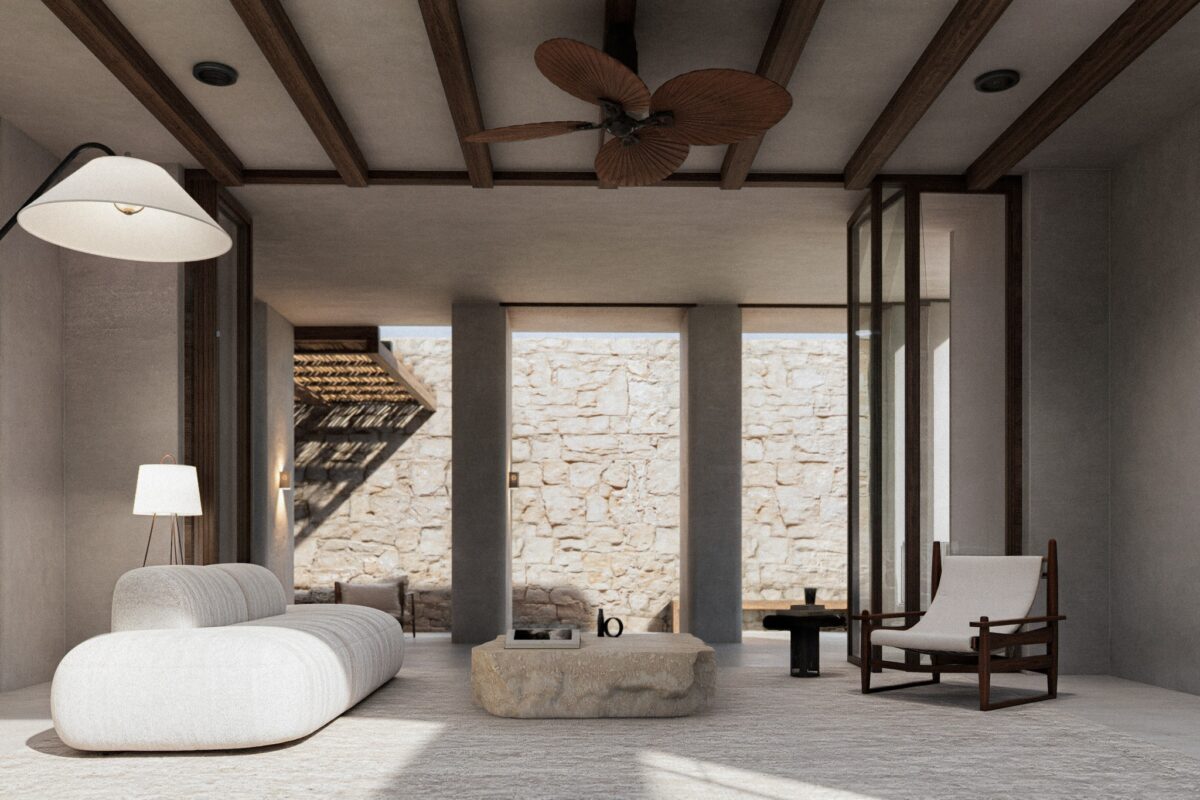
Choose the Pool Type Based on Behavior, Not Trends
A great pool is the one that gets used. Start with the question: “How will this home actually use the pool?” rather than “What pool type is popular right now?”
- Lap Pool (long pool): Best for people who swim seriously. Clean lines, calm geometry, and a strong architectural rhythm.
- Courtyard Pool (pool in a courtyard): Ideal for high privacy and a quiet home atmosphere; easier to control sightlines from outside.
- Infinity Edge: Works when you have distant views or sloping land, but requires careful structural and water-system detailing for long-term stability.
Practical Note:
If the home includes elderly family members or small children, prioritize safe pool entry and the wet walking distance (where people walk with wet feet). These factors often determine how frequently the pool is used in real life.
Infinity edges look best when there’s a true horizon view and meaningful level difference. If the “view” is only a neighbor’s wall or nearby trees, the result rarely justifies the higher complexity and maintenance.
Pools with many corners or multiple stepped levels increase the risk of problems: more “dead corners,” harder cleaning, and heavier upkeep. If there’s no strong functional reason, a simpler, calmer geometry is usually better.
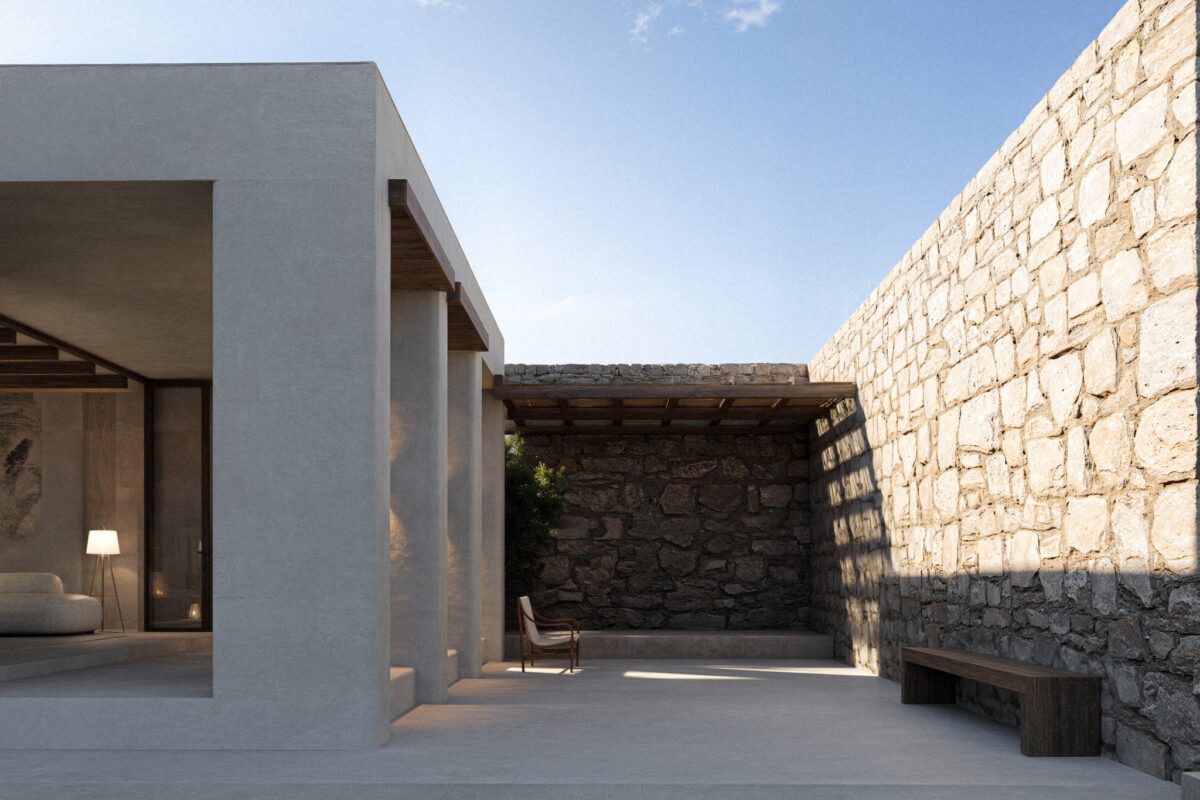
Wind, Sun, and Shade Are the Real Tools of Comfort
In Thailand’s climate, the comfort of a pool villa is often decided more by wind and sun than by luxury materials. A house can be stunning, but if air doesn’t move and the pool deck is scorching, the space will naturally be used less.
A strong principle is designing the villa so it can open up on good-weather days and still be controlled on harsh sun or heavy rain days.
Climate Note:
Shade is not decoration. It is the condition of usability. A pool deck without shade is often too hot to step on between 10:00–16:00, and will be abandoned by default.
Good sun control usually comes from layering: deep verandas + canopies + façade shading + large trees, rather than relying only on interior curtains.
If you must use large glass panels, plan the orientation and shading carefully because water reflections can make interiors brighter and hotter than expected.
Separate Wet and Dry Circulation for Easy Living
A well-functioning pool villa designs the wet–dry logic from the beginning. If you must walk through the living room to reach a bathroom after swimming, the whole house becomes wet, slippery, and uncomfortable.
A strong approach is creating a short, clear wet route with support points: a foot-rinse area, outdoor shower, changing spot, and easy access to a small bathroom.
Operation Note:
Adding a small bathroom or shower point near the pool deck often improves real-life usability more than increasing the pool size.
Deck materials must be evaluated for both slip resistance and surface heat. Some materials are non-slip but become painfully hot; others stay cooler but get slippery when wet.
Storage for towels and pool equipment should be near the deck—not hidden deep inside the house or in a distant storage room.
Pool Villa Pre-Design Checklist
- Does the pool deck have enough shade for people to actually sit and stay comfortably?
- Are the walking surfaces around the pool slippery—or too hot to use?
- Is the pool equipment room easy to access, and is its noise isolated from resting zones?
- Is there adequate storage for pool tools and long-term maintenance items?