
Most homes don’t suddenly fall apart.
Instead, they slowly lose their “fresh feeling.”
- You might notice:
- A slight smell in a closed room
- A bit of mold behind a wardrobe
- Swelling at the bottom of a door
- A bathroom that never quite feels dry
It’s easy to blame cleaning, or think, “Maybe the climate is just like this.”
But a lot of these problems come from how the house was built to deal with moistureor not built to deal with it at all.
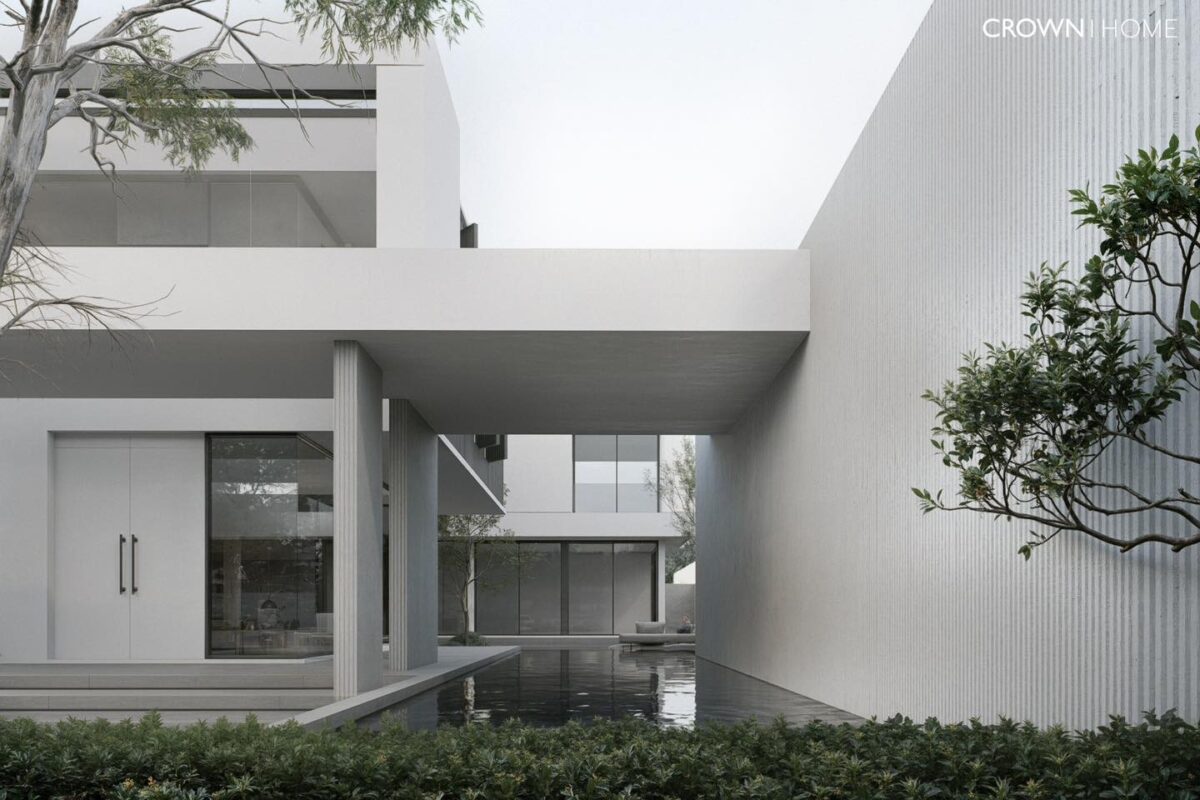
CROWN’s point of view – Freshness is something you design, not spray onAt CROWN, we think of “freshness” as part of the design, not something you add later with air freshener or a dehumidifier.
In Thailand, moisture comes from several places:
- Humidity in the air
- Water in the ground
- Rain pushed by wind into walls and openings
Each one behaves differently. So instead of treating all moisture as the same problem, we separate it and give each type its own strategy.
We design the outside of the house to keep out driven rain where it really matters, and we design the house to “dry out” properly where it’s safe to allow some breathing. The idea is not to wrap the house in plastic, but to guide water and moisture in a smart way so it doesn’t get trapped where it shouldn’t be.
How we protect against moisture in everyday details Here’s how this thinking shows up in real homes:
- Bathrooms that actually dry out
Shower floors are pre-sloped so water goes straight to the drain.
Waterproofing is done underneath the finishes, turned up at walls and thresholds, and carefully sealed around pipes and drains.
Exhaust fans and natural airflow help the room dry after use, so mold and smells don’t have a chance to settle in. - Terraces and flat roofs that don’t hide water
We design clear slopes, drainage points, and backup overflow routes.
Waterproofing isn’t just painted on top—it runs continuously under screeds, up parapet walls, and behind flashings, so rain driven by wind can’t sneak behind tiles and sit there quietly until the next rainy season reveals a stain. - Ground moisture
We think not only about water coming down from the sky, but also water coming up from the ground.
Damp-proof layers, capillary breaks, and drainage details help stop moisture from wicking up into walls and floors, which is a common cause of bubbling paint and “mysterious” damp patches. - Windows and doors in heavy rain
Openings are detailed so they can handle rain arriving sideways, pushed by wind.
Sills, drip edges, and seals are chosen and shaped to let water drain out and away, rather than pulling it back into the wall.
And just as important as the products is how everything is installed: the order of steps, the quality of workmanship, and checking key areas before they get covered up.
What this means for you
When moisture is managed clearly and calmly, your home keeps its fresh feeling for much longer.
You’re less likely to:
- Open a closet and smell damp
- See mold forming in the same corners every year
- Deal with swollen doors and tired-looking finishes too early
You get a house that smells like “your home,” not like something trying to cover up hidden problems.
What CROWN can do to help
If you’re planning a home and you’re worried about musty smells or mold over time, that’s a very reasonable concern in Thailand.
We can help you:
- Understand the main moisture risks on your site
- Design bathrooms, terraces, roofs, and ground contact areas with proper moisture logic
- Make sure there are clear paths for water to escape and for spaces to dry out
You don’t have to know the difference between membranes, sealers, and damp-proof courses.
We’ll explain options in plain language and focus on what matters most: a home that stays feeling clean, dry, and fresh.
If you’d like to explore this together, you can contact CROWN for a private consultation.
Our aim is simple: to help you build a house where freshness isn’t temporary, but built into the way the home is put together.